FEATURED PERSONALITIES


EVENTS

Establishment of Muslim Rule
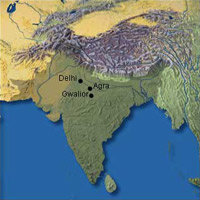
Though Muslims entered South Asia with the conquest of Sindh by Muhammad bin Qasim and then with the annexation of Punjab by Mahmud Ghaznavi, yet the real credit of the establishment of Muslim rule in the region goes to Shahab-ud-din Muhammad Ghuri. The Ghurids had ...
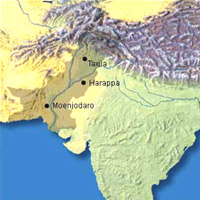
Ancient Empires of the Sub-Continent
Some of the earliest relics of Stone Age man were found in the Soan valley near Rawalpindi, dating back to ...
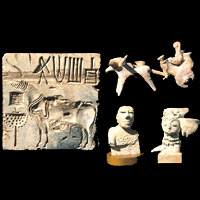
Physical Features of Indus Men
Four types of skeletons are found from archeological remains of Indus Civilization. Proto-Australoids or Caucasic people were in majority. They ...

Origin of Indus Civilization
Indus Civilization was one of the oldest civilizations. It covers the area of 500,000 square miles, which spread in the ...

Early Cultures of Indus Civilization
Some of the earliest relics of Stone Age man in the subcontinent are found in the Soan Valley of the ...


ARTICLES
Quran and Science
The only book that is authored by God on the earth is Al-Quran was revealed in Arabic to Prophet Muhammad (SAW) over a period of twenty-three years ending in 632 A.D., the year he passed ...

A Great Nation
We are passing through a difficult stage and the option we have is between the devil and the deep sea. ...

Indus Religion
We don’t know much about the religion of Indus civilization because their script has not been deciphered as yet. However ...
Early Cultures of Indus Civilization
Some of the earliest relics of Stone Age man in the subcontinent are found in the Soan Valley of the ...

UNO: United Nations Organization or United No Objection
Just a few years back, when I was in my early classes, I was taught that after the World War ...

Musharraf Vajpayee Summit
The relations between India and Pakistan are at their lowest ebb since the two fought at Kargil, just after signing ...

Three Terrorists of the World
There are some people whose existence on earth is really a blessing of Allah (Sub ha na wa taala). They ...

To Have Faith Is To Have Wings
At times a devastating life event can often trigger depression, lack of motivation, and a state of mind that spells ...

Ideology of Pakistan
The ideology of Pakistan stems from the instinct of the Muslim community of South Asia to maintain their individuality by ...
Establishment v/s Bureaucracy
President Musharraf government seems to be losing grip over things. He is paying lots of attention to the NRB Chairman ...
Agra Summit: A Failure?
Agra Summit ended up in an anti-climax. Before and during the meeting of President Musharraf and Prime Minister Vajpayee, there ...
 Loading ...