FEATURED PERSONALITIES


EVENTS

Establishment of Muslim Rule
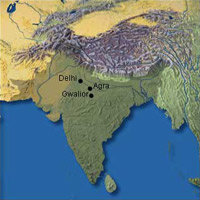
Though Muslims entered South Asia with the conquest of Sindh by Muhammad bin Qasim and then with the annexation of Punjab by Mahmud Ghaznavi, yet the real credit of the establishment of Muslim rule in the region goes to Shahab-ud-din Muhammad Ghuri. The Ghurids had ...
Ancient Empires of the Sub-Continent
Some of the earliest relics of Stone Age man were found in the Soan valley near Rawalpindi, dating back to ...
Physical Features of Indus Men
Four types of skeletons are found from archeological remains of Indus Civilization. Proto-Australoids or Caucasic people were in majority. They ...

Origin of Indus Civilization
Indus Civilization was one of the oldest civilizations. It covers the area of 500,000 square miles, which spread in the ...

Early Cultures of Indus Civilization
Some of the earliest relics of Stone Age man in the subcontinent are found in the Soan Valley of the ...


ARTICLES
Quran and Science
The only book that is authored by God on the earth is Al-Quran was revealed in Arabic to Prophet Muhammad (SAW) over a period of twenty-three years ending in 632 A.D., the year he passed ...

Three Terrorists of the World
There are some people whose existence on earth is really a blessing of Allah (Sub ha na wa taala). They ...

The Story of Kargil
In the summer of 1999, a 73-days military conflict was fought at Kargil unveiling new insights into an asymmetric conflict ...

Vedic Aryans
Indus valley civilization was replaced by village cultures of Vedic Aryans from Central Asia, who were virtually invaders in the ...

What a Laugh
I never really like Mr. Aziz, even before he was tied up as Prime Minister. He always seemed arrogant and ...

The Small Things in Life That Matter
Its the small daily happenings, which make us all cry with grief or scream with joy. There is one universal ...
Indus Architecture
The architecture of Indus civilization that is mainly observable in Moenjodaro and Harappa had three basic characteristics: an outstanding uniformity, ...
Physical Features of Indus Men
Four types of skeletons are found from archeological remains of Indus Civilization. Proto-Australoids or Caucasic people were in majority. They ...

A Glimpse of the Quaid
The Quaid needed to be discovered, his mystery unraveled. Not for his own sake because his place in history is ...
End of Indus Civilization
Rise and fall of civilizations is a complex phenomenon. No single factor is responsible for such a colossal event. Although ...

Indus Script
Indus script is believed to be invented around 2500 BC. It was uniformly used throughout the Indus era. A bizarre ...
 Loading ...